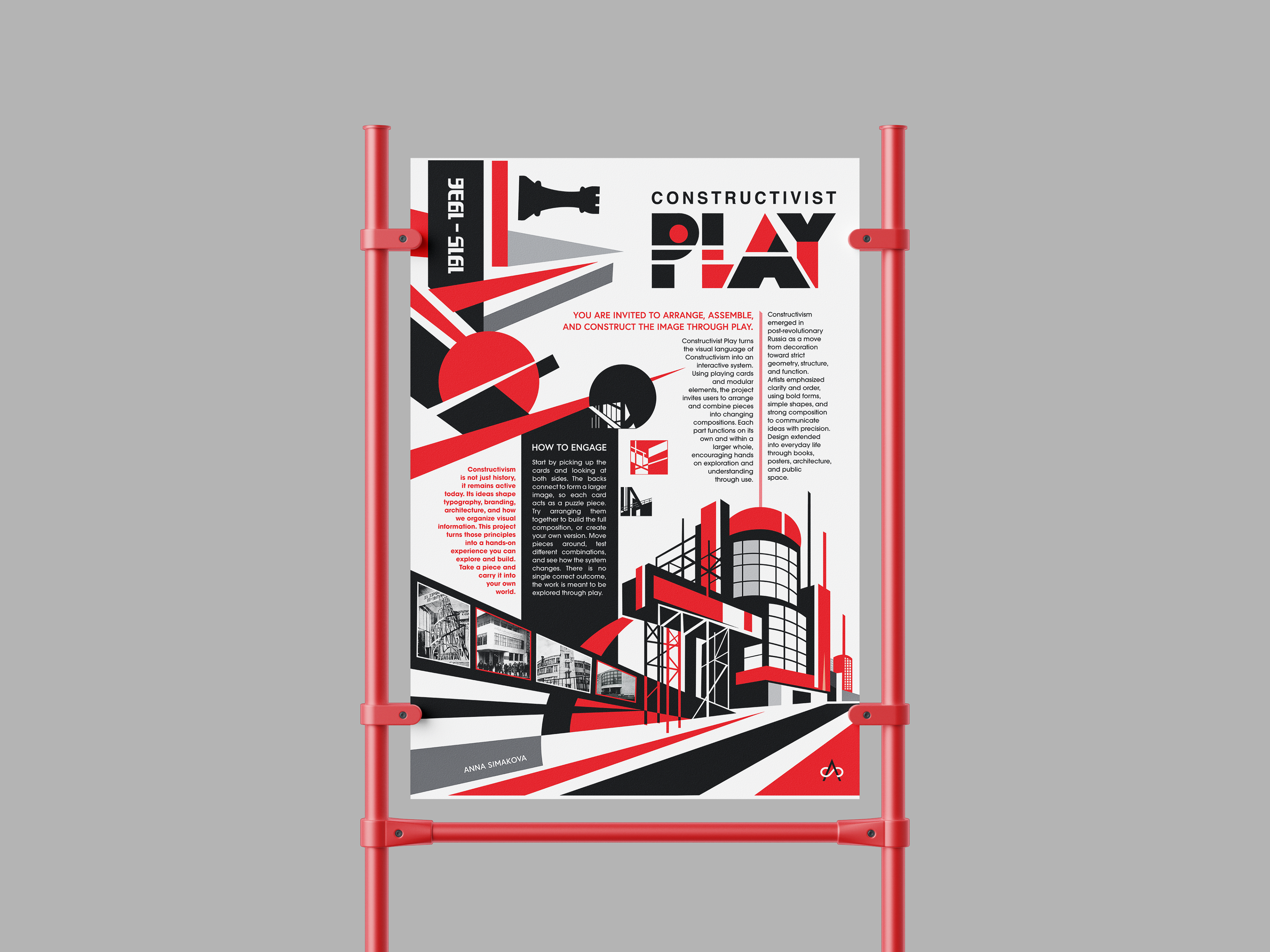


Constructivist Play is a spatial installation translating early Soviet Constructivism from a historical style into a system visitors physically handle. The project moves the movement's geometry and structure off the museum wall and into an interactive object, using play to carry a demanding, historically specific design language. It was exhibited at the Gillespie Gallery of Art at George Mason University.
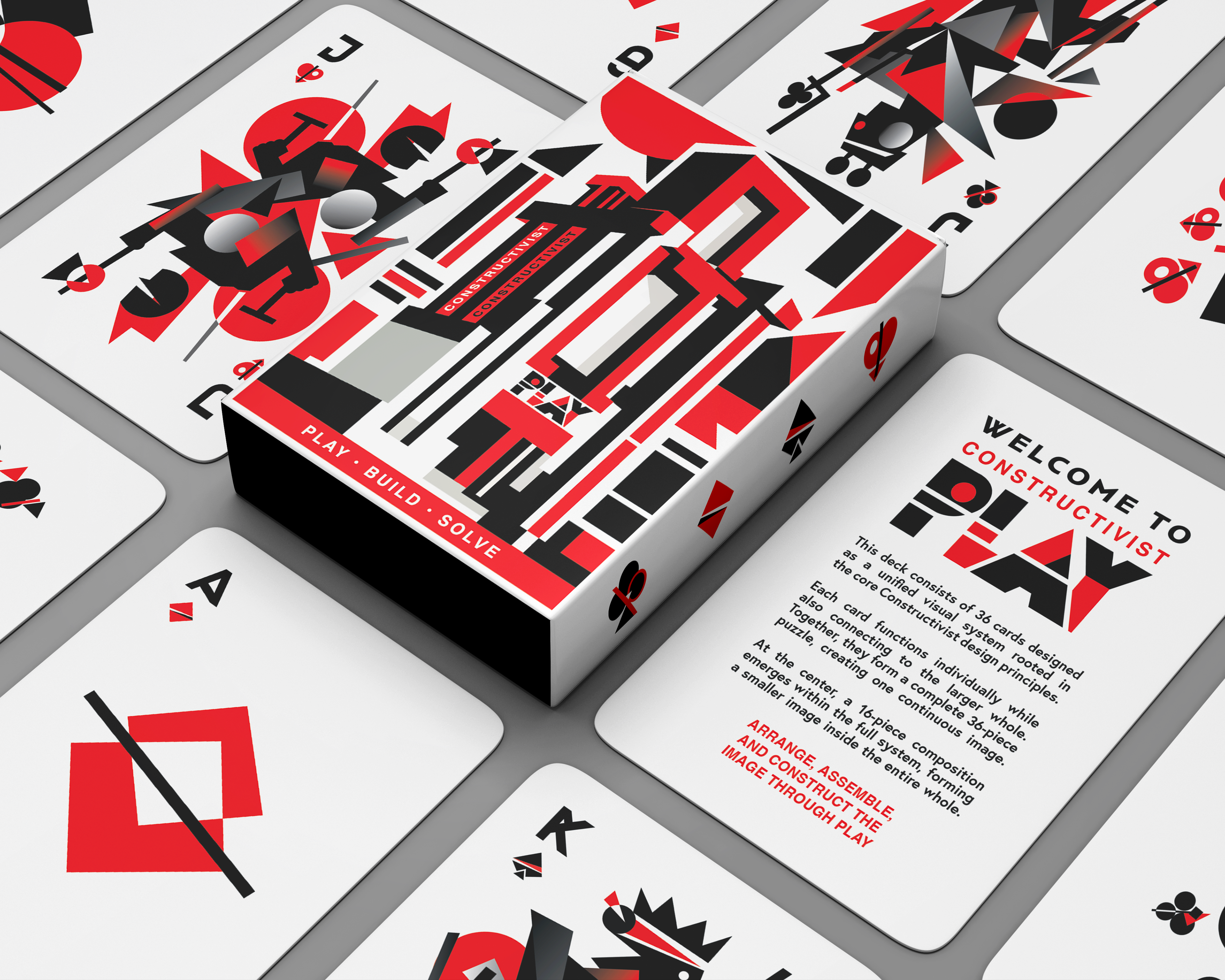


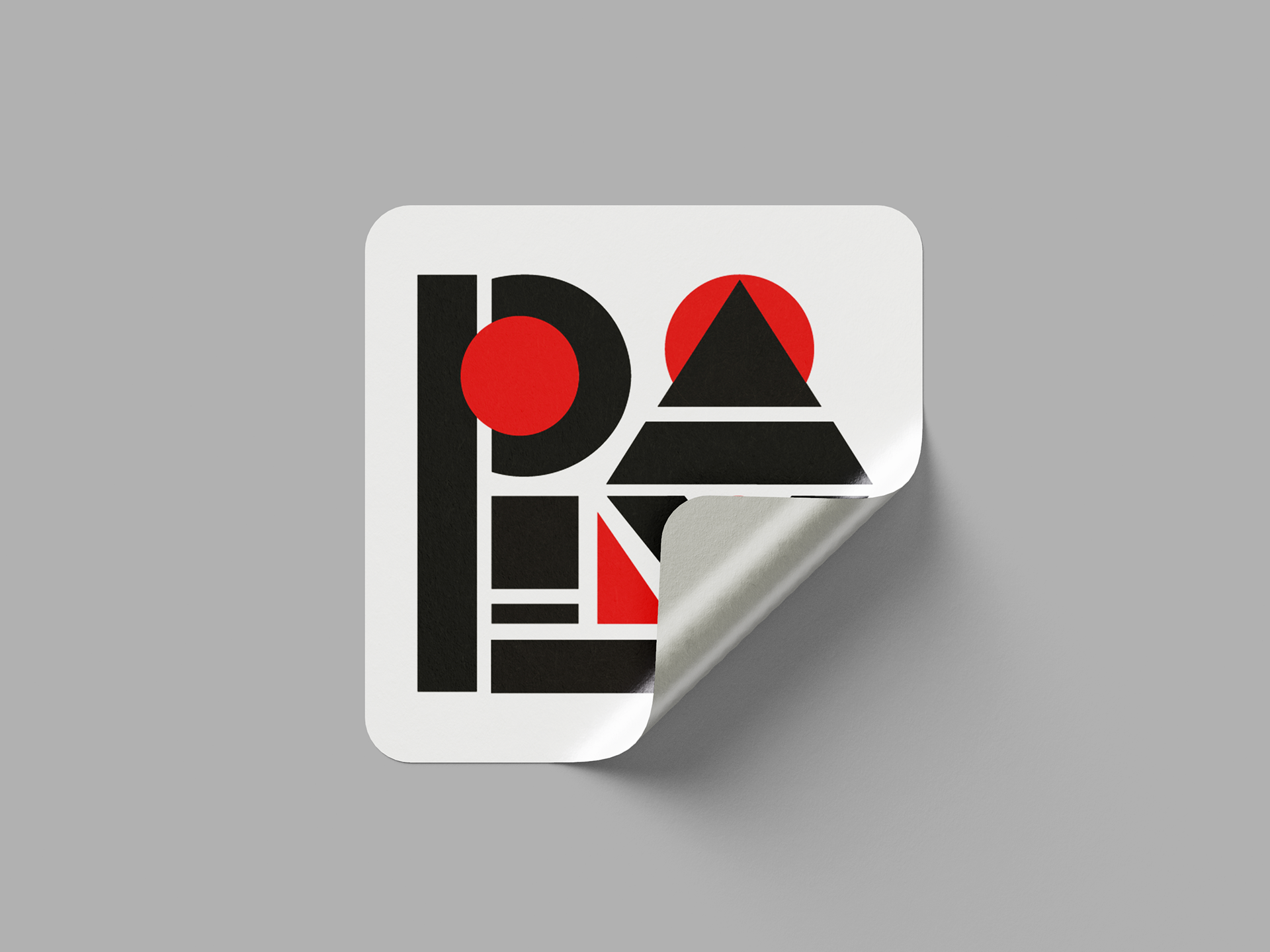
The installation includes four deliverables. (1) A custom 36-card playing deck, with kings, queens, and jacks rebuilt from Constructivist geometry. (2) A hand-painted chessboard in red and black, paired with a mirror reflecting half the playing surface back at itself. (3) A 24 by 32 inch poster laying out Constructivism's history alongside instructions for the cards. (4) Diagrammed packaging and stickers carrying the same puzzle logic.

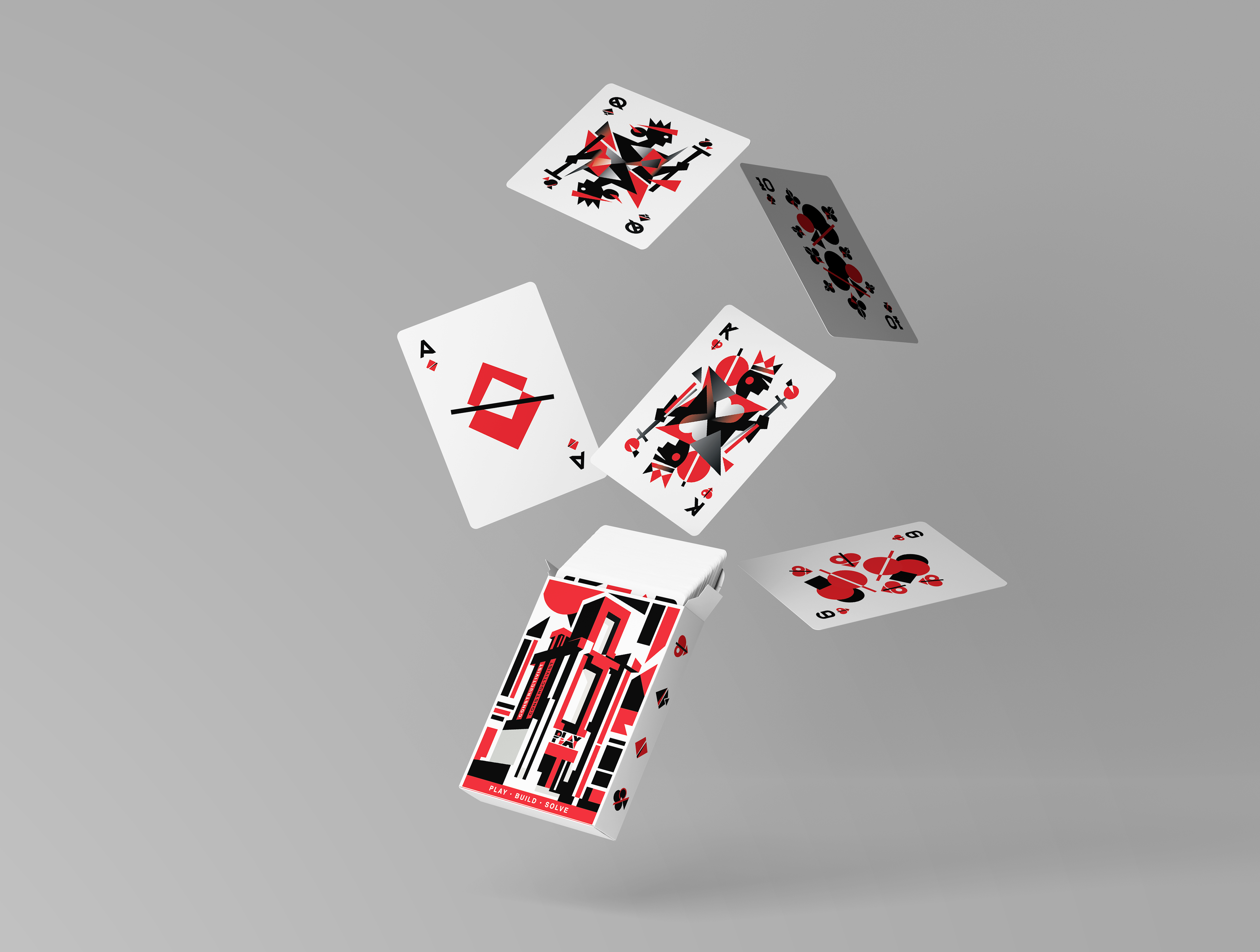

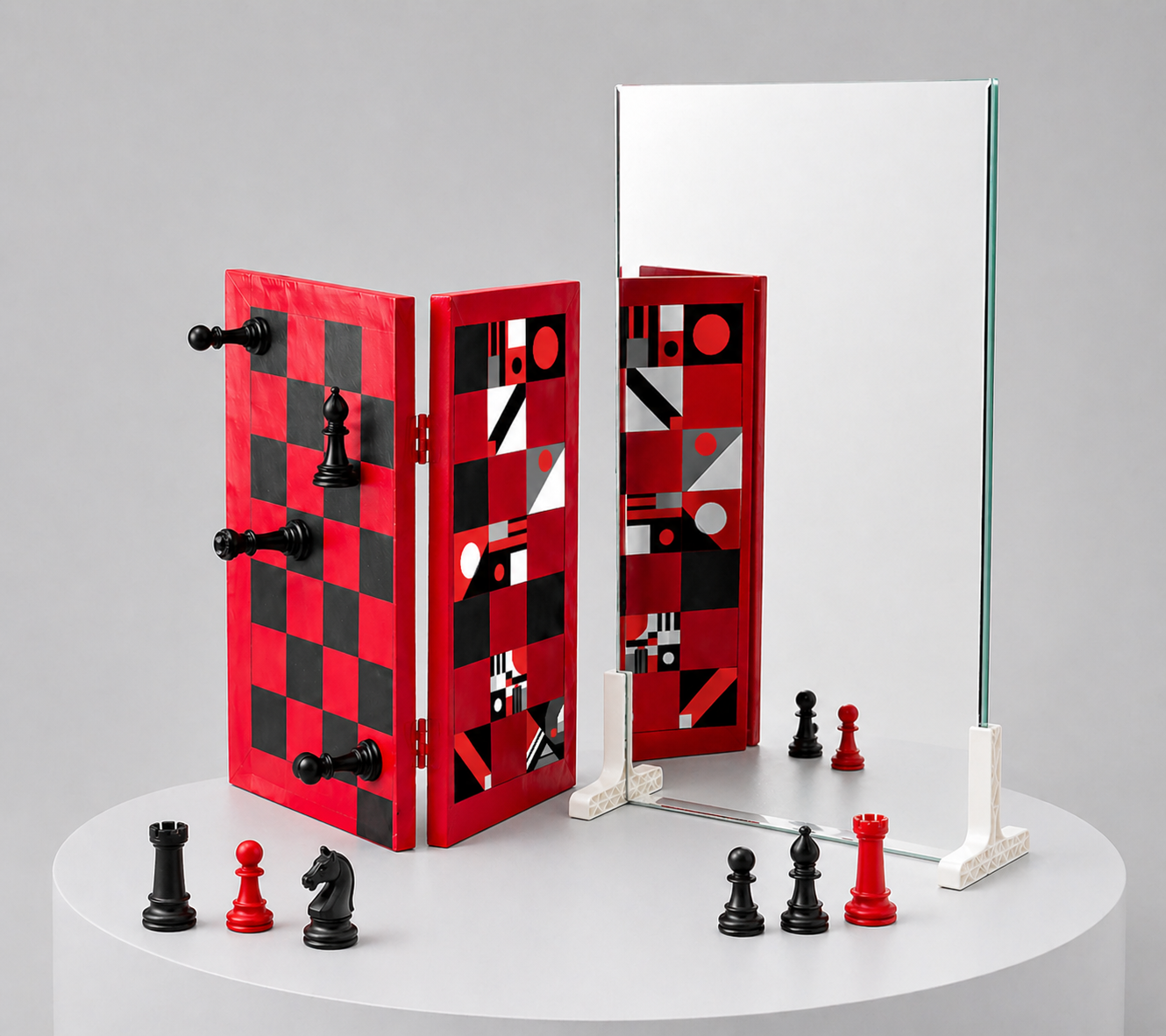


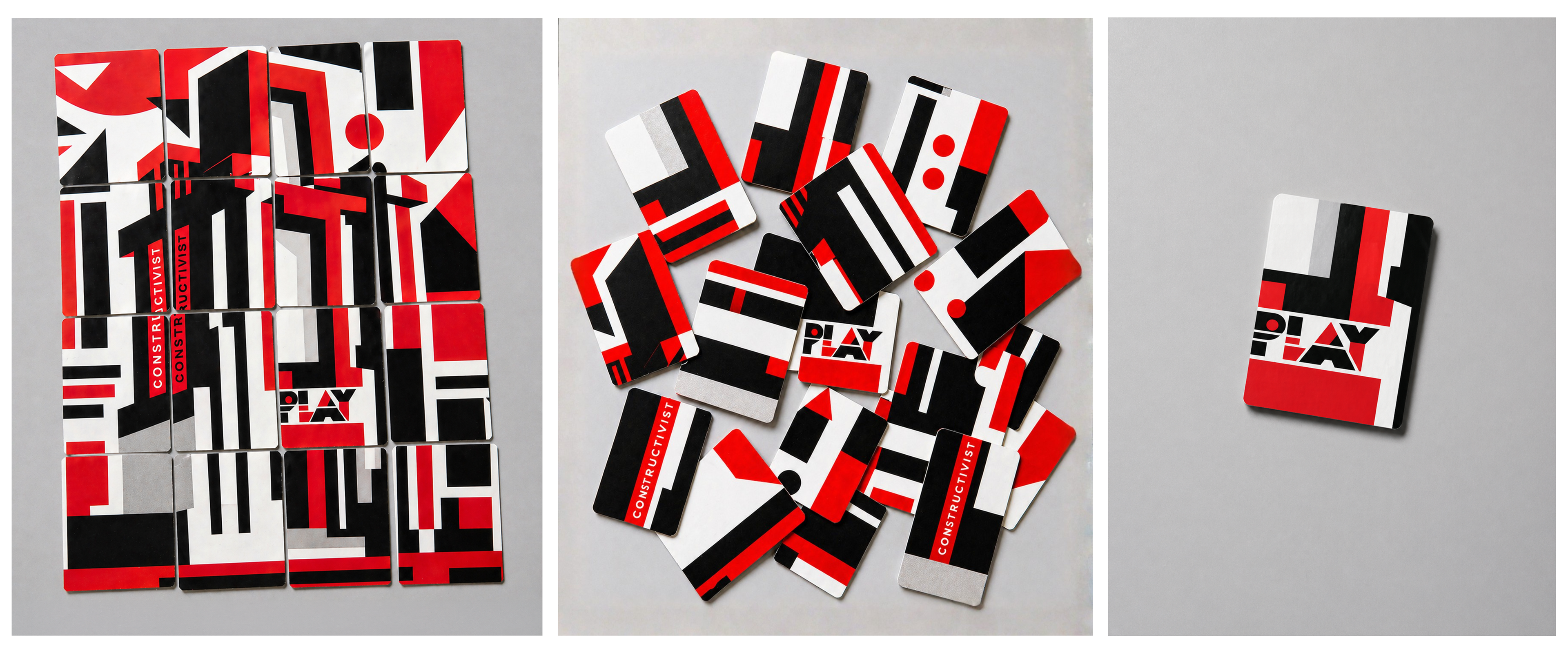
At the Gillespie Gallery of Art, visitors physically engaged with the installation, playing with the deck, studying the chessboard, and piecing together the interlocking card backs. The goal was not a single correct outcome, but conversation and different readings of the same set of rules, testing whether a century old design language could still generate that engagement today.